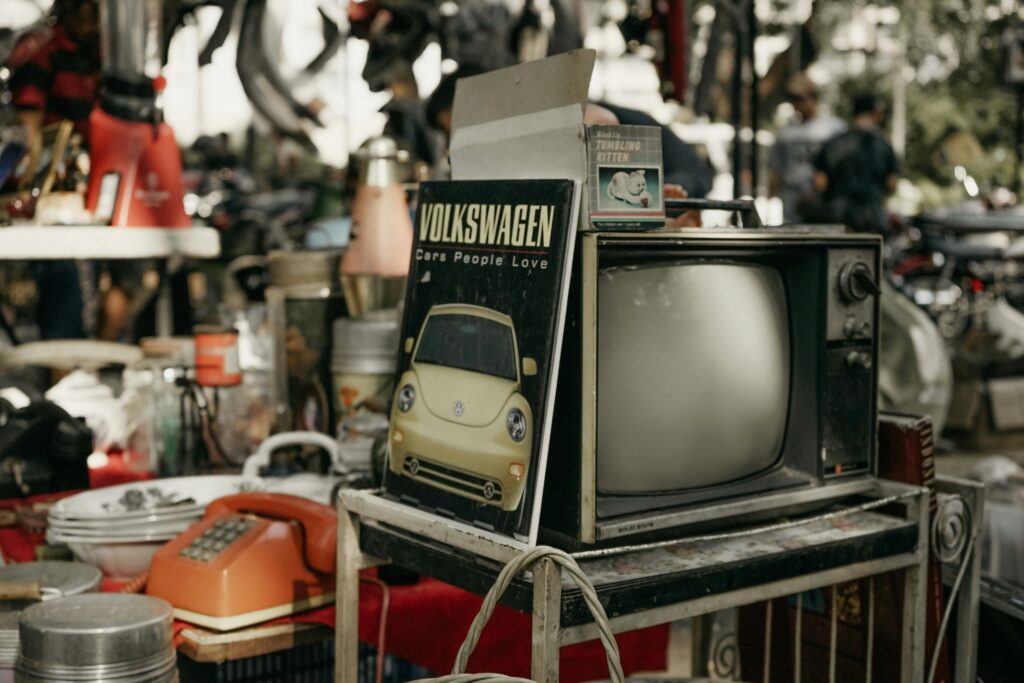
About once a week, I try to make a trip to make a trip to one of the several thrift stores in my neighborhood. Sometimes, I buy something useful for my house. But often, I just go to window shop. As I browse the knickknacks and other items on the shelves, I’m ridiculously intrigued by the stories of each piece, my brain running rampant with imagined histories.
But for years, Japanese organizational guru Marie Kondo has presented a simple message. You don’t need a ton of stuff to be happy. Ideally, your home should be filled only with items that truly spark joy for you. Kondo’s basic idea has inspired thousands of people to finally declutter and donate items to thrift stores and charities. In fact, outlets such as National Public Radio and the Wall Street Journal report that thrift stores like Goodwill have been “swamped” with an overwhelming amount of goods. From the stance that an organized space can make interacting easier, and given that real estate space is increasingly tiny for the price, this isn’t necessarily a bad thing.
Scripture has some mirrors for Kondo’s minimalist way of living. In Matthew 19:21 (NKJV), for example, Jesus advises a rich, young ruler to sell what he has, give to the poor, and follow Him. In Acts 2:44-46, believers do just that, living “with gladness and simplicity of heart.” Matthew 6:19-21 further cautions us not to collect treasures on earth. It emphasizes the comparative richness of Heaven, even as Jesus acknowledges in Matthew 19:24 that “it is easier for a camel to go through the eye of a needle than for a rich man to enter the kingdom of God.”
But when it comes to the loss of memories and tradition, I’m left with a heavy worry that perhaps our rush to declutter has gone too far.
What really gives value to the goods you find in thrift stores
Items by themselves have little meaning. It is the way we use them in our daily lives that assigns and communicates their value. So, when something does spark joy in us, it is because we have created specific associations with that item, or because the item allows us to express some aspect of ourselves so that we feel more free. In that sense, material goods can be wildly effective tools for preserving beliefs and facilitating deeper connection with others.
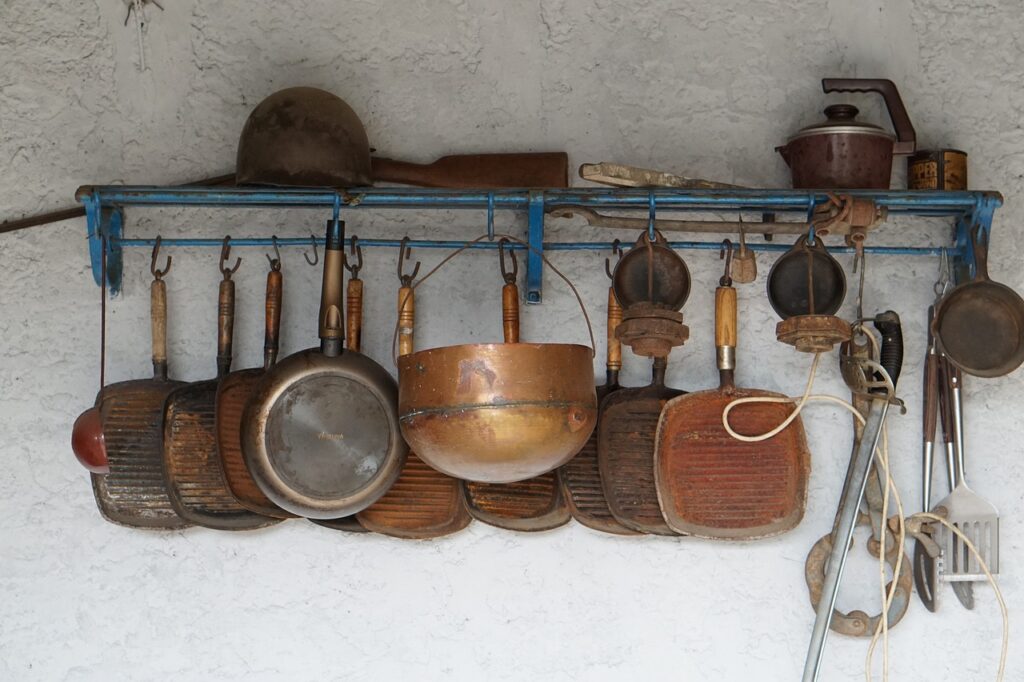
Probably the best example here is kitchenware. Thrift stores are buried by serving platters and old gravy boats, punch bowls and cups, cast iron pans that need only a fresh patina. People don’t rid themselves of these items because they stopped enjoying great food and friendship. They do it because culture shifted to demand fast, easy preparation and convenient entertainment, largely thanks to technological innovations like the microwave. Over time, we are losing old culinary techniques and points of etiquette. In our sea of disposable drink containers and paper plates, we struggle to get excited about tools we no longer know how to properly use.
The neuroscience of memory and using your stuff
Let’s stay with the bakeware example a bit longer. Neuroscientists know that memory consolidation and recall is incredibly complex, involving every one of the senses. But on a basic level, they also know that using the information frequently matters. The more often you pull up information, the stronger the pathways to it become. As a result, the less likely the memory is to fade, and the easier it gets to remember.
So, if you’re using Grandma’s gravy boat all the time, that gravy boat—or perhaps more accurately, the process and sensory intake involved in using it—keeps the memory of Grandma and her use of the gravy boat strong. It’s incredibly easy to pass on her ideas and ways of being.
But what happens when you donate Grandma’s gravy boat? You don’t go through the processes that trigger the neurological sequence related to the memory as much. As your habit of preparing her recipe fades, neurological connections can fade, too. Eventually, you might not remember elements related to that gravy boat and your Grandma at all.
Material items as memory aids and memorials in the Bible
In the Old Testament, God routinely enhanced the material wealth of His servants. This enhancement wasn’t because those servants lusted for or requested those things. Rather, it was to reward them for their faith. In Genesis 13:5-7, for example, we read how the possessions of Lot and Abram “were so great that they could not dwell together.” Job 1:3 similarly relates how God had blessed Job with great possessions and herds. By building their wealth and making these servants great, God also used “stuff” to help others around His servants see just how great He is, and how glorious it is to have Him in your court. And in those days, inheritance of property was a huge deal because it ensured financial and social security.
But God also could get very specific with things to highlight rules, events, and truths He wanted us to remember. In Exodus 34:27:29, for instance, we find the story of God giving Moses stone tablets with the ten commandments. The Ark of the Covenant described in Exodus 25:10-22 carried not only these tablets, but also Aaron’s rod and manna, so that the Israelites would never forget who had delivered them from slavery and brought them out of Egypt.
Today, we still use physical things to remember God and the importance of loving Him and our neighbor. Many people, for instance, use rosaries when praying. Churches also use special serving trays and cups when celebrating communion. The intent is to honor the fact that Jesus asked his disciples to eat in remembrance of Him.
You don’t have to keep everything, but a little doesn’t hurt
With this in mind, the enormous amount of goods donated to thrift stores is, in a very real way, heartbreaking. It suggests how easy it is for people to disconnect from what used to be, disregard craftsmanship that can last across generations, and completely sacrifice a legacy in the name of personal autonomy. I’ve even come across family Bibles tucked on the shelves, their handwritten dedications to recipients and family genealogies ignored.
All this said, junk is junk. Not everything in a thrift store speaks to who someone was or what a family loved. It can be a good to choose to live differently, become more open minded, and grow, just as the Israelites left what they had in Egypt for something better. And sometimes, parting with some items can be part of the normal grieving process. It’s OK to let those items go with clear intention, create some space, and breathe. Simple can be amazingly good.
But if there are no items anymore in your life that speak of anyone else, if there is no sign of your history at all, perhaps it’s worth asking yourself why. Your story matters, so don’t be afraid to use a few truly meaningful pieces to recollect it, and to connect with others to pass it down and celebrate everything God has done for you.
Image credits:
Indira Tjokorda on Unsplash
ballardinix from Pixabay